

Skin Barrier and Balance: The Foundation of Healthy, Resilient Skin
A founder perspective on the skin barrier and what supports it over time.
- why the skin barrier matters
- what is the skin barrier?
- the skin barrier and microbiome
- when the skin barrier is under pressure
- what influences barrier function
- when skin is asked to manage too much
- supporting the skin barrier
- ingredients and the skin barrier
- what this means for your skin
- key takeaways
- faqs
Why the Skin Barrier Matters
For many people, conversations about skin begin when something no longer feels quite right.
The skin may feel tighter than usual, more reactive, or simply less settled than it once did. Sometimes there is visible redness. Other times, it is harder to define, just a sense that the skin is not responding as it usually does.
These are often the moments when attention turns to the skin barrier.
Working closely with skin for many years, one thing has become very clear to me: these changes rarely appear suddenly. More often, they build quietly long before they are fully recognised.
Understanding the skin barrier helps explain not only why these shifts occur, but how the skin works continuously to maintain balance.
What Is The Skin Barrier?
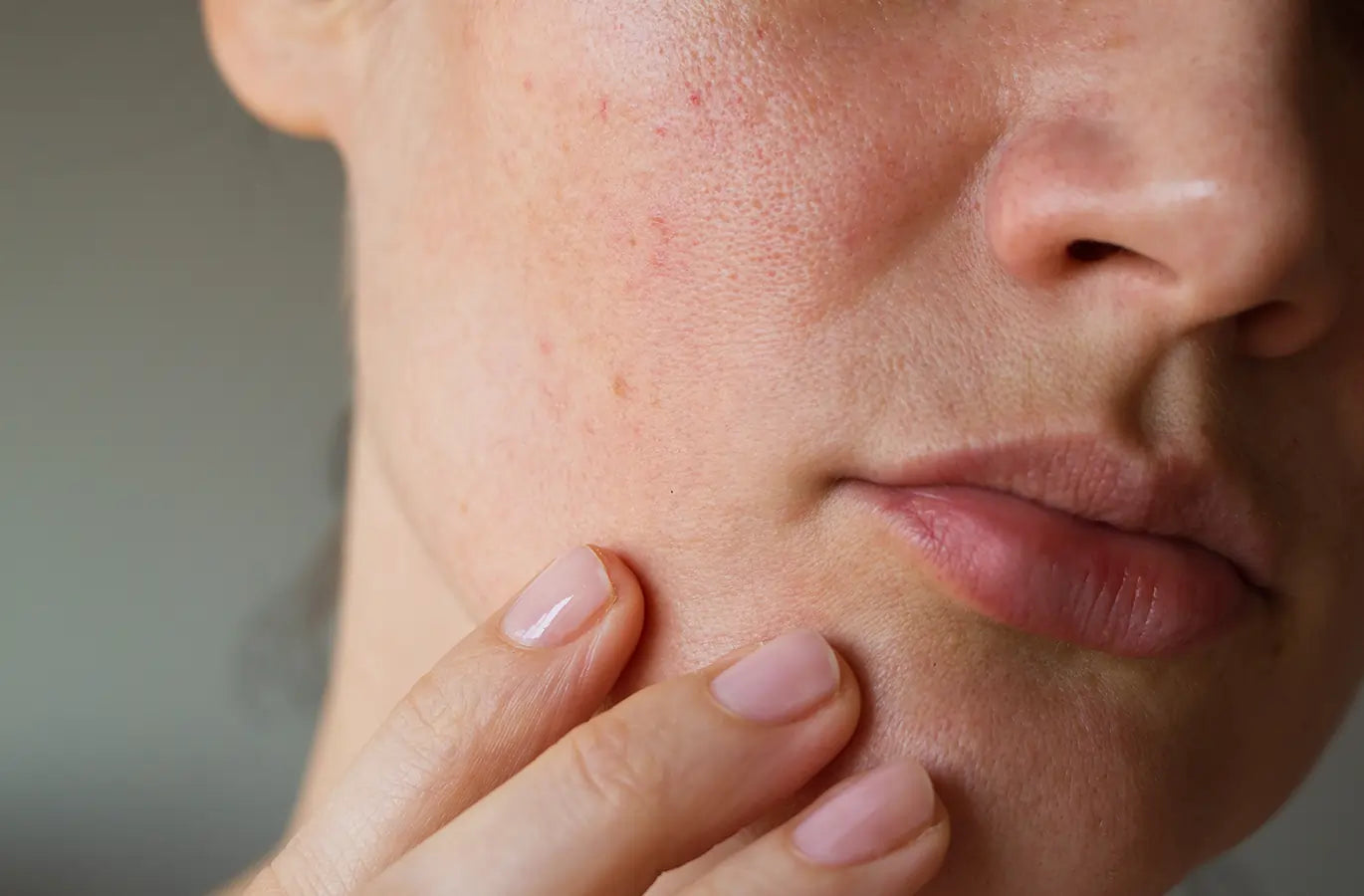
The skin barrier sits within the outermost layer of the skin, the stratum corneum, which forms part of the epidermis. It is where the body meets the outside world. 1
This layer is made up of flattened skin cells, known as corneocytes, held together by a matrix of lipids, primarily ceramides, cholesterol, and free fatty acids. 1
You may have heard this described as a brick-and-mortar structure. The skin cells form the structure, while the lipids help hold everything together. More simply, the barrier functions as a flexible seal between the skin and its environment.
When that seal feels intact, the skin is generally better able to retain hydration and maintain comfort.
One of the barrier's key roles is regulating trans-epidermal water loss, the natural movement of water from within the skin into the surrounding environment. 2
This process is always occurring, but the barrier helps keep it at a level the skin can comfortably manage.
When the barrier is functioning well, hydration is maintained more easily, and the skin often feels calmer, softer, and less reactive.
The Skin Barrier and Microbiome
The skin microbiome exists on the surface of the skin, which means it is directly influenced by the environment the barrier creates. 3
Hydration, lipid composition, and surface pH all contribute to how microbial communities behave and interact. 3, 4
When the barrier environment feels stable, these communities tend to remain more consistent.
When the barrier is under pressure, that environment can shift, and the behaviour of those microorganisms may shift with it.
This is why the barrier and microbiome are best understood together.
Skin does not function in isolated parts. It behaves as a connected biological system.
Skin behaves as a connected biological system, not as isolated parts.
When the Skin Barrier Is Under Pressure
Skin rarely signals change in an obvious way. more often, it shows up quietly.
You might notice a feeling of tightness that never quite resolves, or a sensitivity that was not there before. Sometimes there is low-level redness that comes and goes, or a sense that hydration never fully settles, no matter what you use.
These are not necessarily signs that something is wrong. Often, they are signals that the skin is working harder to maintain balance.
Why reactive skin often needs less, not more
One of the patterns I have observed repeatedly in clinic is that reactive skin is often not lacking care but experiencing too much variation. Too many changes, too many inputs, and not enough consistency for the skin to stabilise.
Clients are often surprised when routines are simplified because it can feel counterintuitive at first. We have become used to thinking that more products, more steps, and faster intervention automatically mean better care. Yet some of the calmest, most resilient skin I have worked with over the years has often come from reducing unnecessary variation rather than increasing it.
With consistency and the right environment, skin often starts to feel calmer, more comfortable, and easier to manage.
If pressure on the barrier continues, however, what begins subtly can gradually become harder to ignore.

What Influences Barrier Function
The skin barrier is continuously adapting to what it is exposed to.
Environmental factors such as UV exposure, temperature, wind, and pollution all influence barrier function. 5 But the routine created for the skin matter as well.
Frequent product changes, excessive layering, and cleansing practices can all influence how the barrier behaves.
Stress and internal changes also play a role. Skin does not operate separately from the rest of the body.
These influences do not act independently of one another. Often, what appears to be a sudden shift in skin is actually the result of multiple smaller changes accumulating together.
Rather than failing, the barrier adapts to what it is being exposed to.
Sometimes that adaptation presents as increased sensitivity, dehydration, or reduced tolerance.
When the barrier is under pressure, skin is not failing. It is responding to what it is asked to manage.
When Skin Is Asked to Manage Too Much
Skin is constantly responding to what is happening around it and within the body. This responsiveness is part of how skin maintains balance.
In recent years, I began noticing a consistent pattern in clinic. Skin that had previously felt stable was becoming more reactive, unsettled, and slower to return to comfort.
In many cases, there had been a significant increase in cleansing and exposure to hand sanitisers. While necessary, repeated exposure to alcohol and surfactants is known to influence barrier integrity, hydration, and surface lipids. 5
What stood out most was not one specific symptom, but a gradual reduction in tolerance. Skin often appeared to be working harder simply to maintain equilibrium.
This is frequently how barrier disruption presents. Quietly at first, then more consistently.
Why reducing pressure helps more than adding products
When the barrier is under pressure, skin may feel more reactive, less comfortable, and more easily influenced by external stressors. It is not failing. it is responding to what it is being asked to manage.
In these moments, adding more is not always the answer. Often, it becomes more helpful to reduce pressure, simplify routines, and allow the skin space to recalibrate.
Changes in the skin environment can also influence the microbiome, further affecting how the skin behaves. 3, 7

What helps the skin barrier function comfortably:
- Consistency over frequent change
- Routines that are steady and uncomplicated
- Reducing what the skin has to manage
- giving the skin space to settle
Supporting the Skin Barrier
Supporting the skin barrier is often less about adding more, and more about creating the conditions in which the skin can function comfortably.
In practice, this usually comes back to how much change the skin is being asked to manage.
When routines constantly shift, or too many products are layered together, skin can struggle to maintain its balance.
As unnecessary variation is reduced, skin often becomes easier to read and its responses more predictable.
One thing I have consistently observed is that skin tends to feel more comfortable when routines are steady, compatible, and uncomplicated.
This is not about doing less for the sake of it. It is about removing what is unnecessary so the skin can return to a more settled rhythm.
Supporting the skin barrier is less about adding more, and more about creating space for the skin to function comfortably.
Ingredients and the Skin Barrier
Certain ingredients are known to work in alignment with barrier function, particularly those that support lipid structure and help maintain hydration within the skin. 1, 6
Increasingly, however, skin science also recognises that skin barrier support cannot be reduced to one ingredient alone.
The skin responds to the overall environment created by a formulation. Texture, surfactant systems, pH, concentration, compatibility, frequency of use, and cumulative exposure all influence how comfortably the skin functions. 1, 6
This is partly why two products containing similar ingredients can behave very differently on the skin.
In practice, supporting the barrier is often less about pursuing individual "hero" ingredients and more about reducing unnecessary disruption while creating conditions the skin can tolerate consistently.
When formulations are approached in this way, the focus shifts away from chasing individual ingredients and back toward supporting the skin environment as a whole.
What This Means For Your Skin
Understanding the skin barrier begins with recognising how responsive skin really is.
Skin is constantly adapting to what is applied to it, what it is exposed to, and what is happening within the body.
When skin is understood in this way, the approach to care often becomes simpler. Not because itself is simple, but because the focus changes.
What supporting the skin looks like in practice
Supporting the skin barrier often begins with reducing how much the skin is being asked to manage at once.
In practice, this can mean creating routines that feel more stable and consistent rather than constantly changing in response to every fluctuation the skin presents. Skin is dynamic by nature. It responds to environment, stress, hormones, climate, cleansing practices, and repeated exposure. Not every change in the skin requires an immediate response.
One of the things I have observed repeatedly is that skin often becomes easier to understand when unnecessary variation is reduced. As routines become more compatible and predictable, the skin frequently feels calmer, more comfortable, and less reactive.
This does not mean the skin should never be supported or professionally treated when appropriate. Rather, it reflects the idea that skin often functions best when the environment around it feels steady.
Increasingly, skin science is also recognising that what the skin is exposed to consistently matters. Small daily exposures, whether supportive or disruptive, accumulate over time and can influence how resilient, comfortable, and adaptable the skin appears and feels. 5
Supporting the barrier therefore also requires patience. The skin renews continuously, but meaningful changes in comfort, hydration, and overall resilience are usually observed gradually over weeks rather than days.
In many cases, supporting the skin is not about forcing faster change, but about creating conditions that allow the skin to function more comfortably and consistently.
the focus becomes understanding how to support the skin, rather than constantly trying to change it.
The longer I have worked with skin, the less I have come to view it as something that always needs intervention, and more as a biological system continually trying to adapt, protect, and maintain balance.
Key Takeaways
The skin barrier sits in the outermost layer of the skin, acting as a flexible seal between the skin and its environment.
When the barrier feels intact, skin retains hydration more easily and tends to feel calmer, softer, and less reactive.
The barrier and the microbiome are best understood together, both shaped by the same surface conditions and influencing each other in turn.
Sensitivity rarely appears suddenly. It usually builds quietly as the skin is asked to manage too many small changes at once.
Reducing unnecessary variation often helps more than adding new products. Steadier routines give the skin space to settle and recover.
Supporting the skin barrier is less about doing more and more about creating conditions in which the skin can function comfortably.
Frequently Asked Questions
In many cases, sensitivity develops gradually. The skin adapts to what it is exposed to, and increased sensitivity can be a sign that the barrier is under pressure.
The skin renews continuously. When supportive conditions are in place, the barrier often returns to a more stable and comfortable state.
There is no single approach that suits everyone. What matters most is how your skin responds. Some skin feels comfortable with regular cleansing, while other skin becomes tight or unsettled when cleansing is too frequent.
The barrier helps regulate water loss. When barrier function feels more stable, the skin is generally better able to retain hydration. 2
Not always, but barrier function often plays a role. Sensitivity can reflect how the skin is responding to both internal and external influences.
- Elias PM. Skin barrier function. Journal of Investigative Dermatology. 2007.
- Proksch E, Brandner JM, Jensen JM. The skin: an indispensable barrier. Experimental Dermatology. 2008.
- Grice EA, Segre JA. The skin microbiome. Nature Reviews Microbiology. 2011.
- Lambers H et al. Natural skin surface pH is on average below 5, which is beneficial for its resident flora. International Journal of Cosmetic Science. 2006.
- Krutmann J et al. The skin aging exposome. Journal of Dermatological Science. 2017.
- Ananthapadmanabhan KP et al. Cleansing without compromise: the impact of surfactants on the skin barrier. Dermatologic Therapy. 2004.
- Byrd AL, Belkaid Y, Segre JA. The human skin microbiome. Nature Reviews Microbiology. 2018.
Related articles
What is the Skin Microbiome? A Complete Guide
A founder-led guide to the skin microbiome, how it works, what shapes it, and why supporting it matters more than controlling it.
Read more Read more
Microbiome Skincare: The Science-Backed Guide to Healthy Skin
A founder-led look at microbiome skincare - what it is, why the skin responds to it, and how to choose well.
Read more Read more
Biotechnology in Skincare: A More Considered Approach to Ingredients
A founder perspective on biotechnology, consistency, and how the skin responds over time.
Read more Read more