

How to Support Your Skin Microbiome
It often begins with what to stop doing, not what to add.
- how to support your skin microbiome
- what gets in the microbiome's way?
- when change makes sense, and when skin wants less
- can a disrupted microbiome recover?
- skin does not exist in isolation
- do you need special microbiome products?
- what support often looks like
- what the microbiome continues to teach me
- key takeaways
- faqs
How to Support Your Skin Microbiome
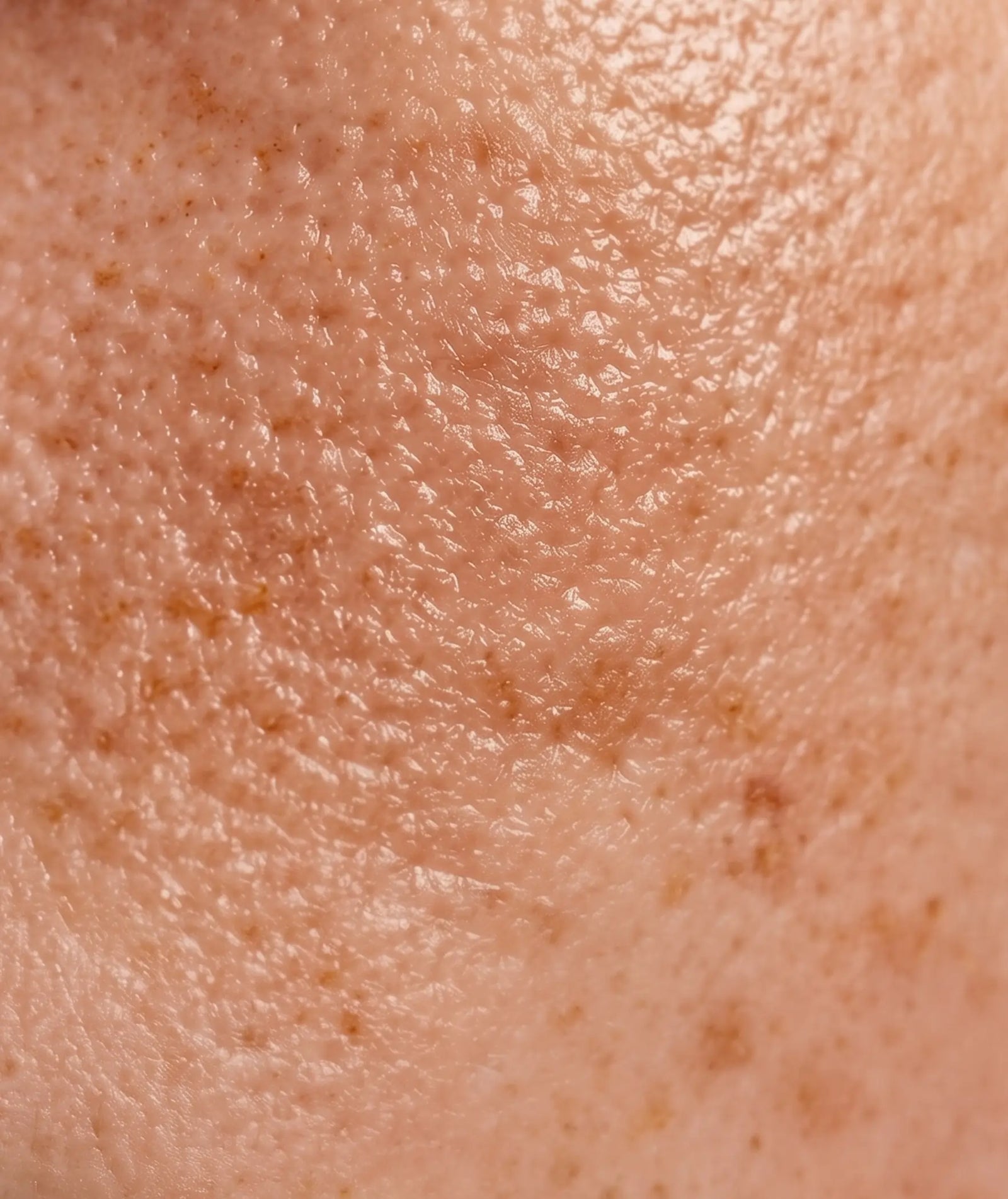
When skin is coping well, it glows.
I am not talking about flawless skin or the kind of polished image we often see in advertising.
What catches my attention is something quite different.
Healthy skin often appears comfortable in itself.
It may not be free from lines. It may not be free from pigmentation. It may not be completely even in colour.
Yet there is often a sense that the skin is managing well. It adapts. It recovers. It appears able to cope with the many pressures placed upon it without constantly showing signs of strain.
Interestingly, this is often what people are responding to when they say someone has "good skin". They are not always responding to perfection. They are responding to signs that the skin is functioning comfortably within its own environment.
The opposite is often true as well.
Skin that is working hard usually tells us that. It may appear dull, uneven, congested or reactive. There may be redness, discomfort or signs that the skin is struggling to keep pace with the demands being placed upon it.

The question that shaped how I think about skin
For much of my career, I found myself becoming increasingly interested in what separated these two experiences.
Why did some skin appear able to maintain balance despite life's inevitable pressures, while other skin seemed to be constantly working harder than it needed to?
The more I learned about the skin microbiome, the more those observations started to make sense.
Today, there is no shortage of advice about how to support the microbiome. New products, ingredients and trends appear constantly. Yet one of the conclusions I keep returning to is surprisingly simple.
The microbiome often seems to function best when it is allowed to do what it was designed to do and we avoid making that job unnecessarily difficult.
Many of the things that support the microbiome are not necessarily about adding more. They are often about creating the conditions that allow the skin's natural systems to function well.
Good skin is rarely perfect skin. It is skin that adapts, recovers, and copes comfortably within its own environment.
What Gets in the Microbiome's Way?
When I think about supporting the microbiome, my mind rarely goes straight to products.
Instead, I find myself thinking about the things that may be making the microbiome's job harder than it needs to be.
One of the most common is constant change.
A new product arrives. An ingredient starts trending. A social media post promises results that seem impossible to ignore. Before long, products that may have been working perfectly well are replaced by something newer and supposedly better.
I understand why this happens.
We have access to more skincare information than ever before and much of it is genuinely valuable.
Research continues to deepen our understanding of skin and there are ingredients available today that simply did not exist when I first began working in this industry.
The challenge is not whether something is new. The challenge is understanding whether the skin is actually asking for a change.
The skin getting the most intervention is often asking for the least
One of the patterns I noticed repeatedly in clinic was that the skin asking for the most restraint was often receiving the most intervention.
The skin that appeared red, reactive, uncomfortable or easily triggered was often the skin being exfoliated most aggressively, treated most frequently or exposed to the greatest number of products.
The intention was always positive. People wanted improvement, relief and healthier skin.
Yet skin does not always respond to pressure in the way we expect.
Many of the healthiest skins I encountered were not necessarily doing more. In many cases they were doing less, but doing it consistently.
This is one of the reasons I have always been cautious about the idea that more skincare automatically means better skincare.
The microbiome exists within an environment. If that environment is being constantly altered, challenged or disrupted, the skin is continually being asked to adapt.
Sometimes that adaptation happens remarkably well. Sometimes it doesn't.
Supporting the microbiome is not about avoiding change altogether. Skin changes throughout life and there are many situations where change is appropriate.
What matters is whether that change is helping the skin function more comfortably or simply creating another challenge for it to manage.
Where over-cleansing and over-exfoliation fit in
Over-cleansing and over-exfoliation fit into this conversation too.
Both are usually done with the best of intentions. Yet both can alter the environment in which the microbiome exists by influencing hydration, barrier function and the conditions present on the skin's surface.1-5
Perhaps this is why I keep returning to the same idea.
Supporting the microbiome is not always about finding the next thing to add.
Sometimes it begins with recognising what may need to be removed.
Supporting the microbiome is often about removing pressure, not adding to it:
- CONSTANT PRODUCT CHANGE ASKS THE SKIN TO KEEP ADAPTING
- OVER-CLEANSING CAN ALTER THE SKIN'S SURFACE CONDITIONS
- OVER-EXFOLIATION CAN DISRUPT HYDRATION AND BARRIER FUNCTION
Sometimes supporting the skin is less about the next thing to add, and more about recognising what to remove.
When Change Makes Sense, and When Skin Wants Less
I do not believe skincare routines should remain exactly the same forever.
Life changes. Skin changes. New research continues to deepen our understanding of skin and there are times when a different product, treatment or approach is entirely appropriate.
The question is rarely whether change is good or bad.
More often, it is whether there is a clear reason for it.
One of the observations that has stayed with me throughout my career is that skin often responds best when changes are made thoughtfully rather than reactively.
A new product may be exactly what the skin needs.
Equally, a product that is already working well may not need replacing simply because something newer has appeared.
We are constantly exposed to new ideas, new ingredients and new promises. Some represent meaningful advances in skin science. Others simply add to the noise.
The challenge is knowing when the skin is asking for something different and when it may simply benefit from consistency.
Supporting the microbiome has never been about resisting change. It is about understanding when change is helping the skin and when it may simply be giving the skin something else to manage.
Learning to hear when skin is asking for less
When skin becomes uncomfortable, our natural instinct is to do something. Add another product, book another treatment or search for another answer.
Sometimes those decisions are exactly what is needed.
At other times, the skin may simply be asking for a different approach. A little less pressure, less disruption, a little more time.
I have often found that skin tells us when it is struggling. Redness, stinging, persistent reactivity or simply a feeling that the skin is never quite comfortable.
These signs do not always point to the same cause, but they can remind us that skin has limits, just as every biological system does.
Respecting skin does not mean ignoring it.
It means paying attention to what it may be trying to tell us.
Can a Disrupted Microbiome Recover?
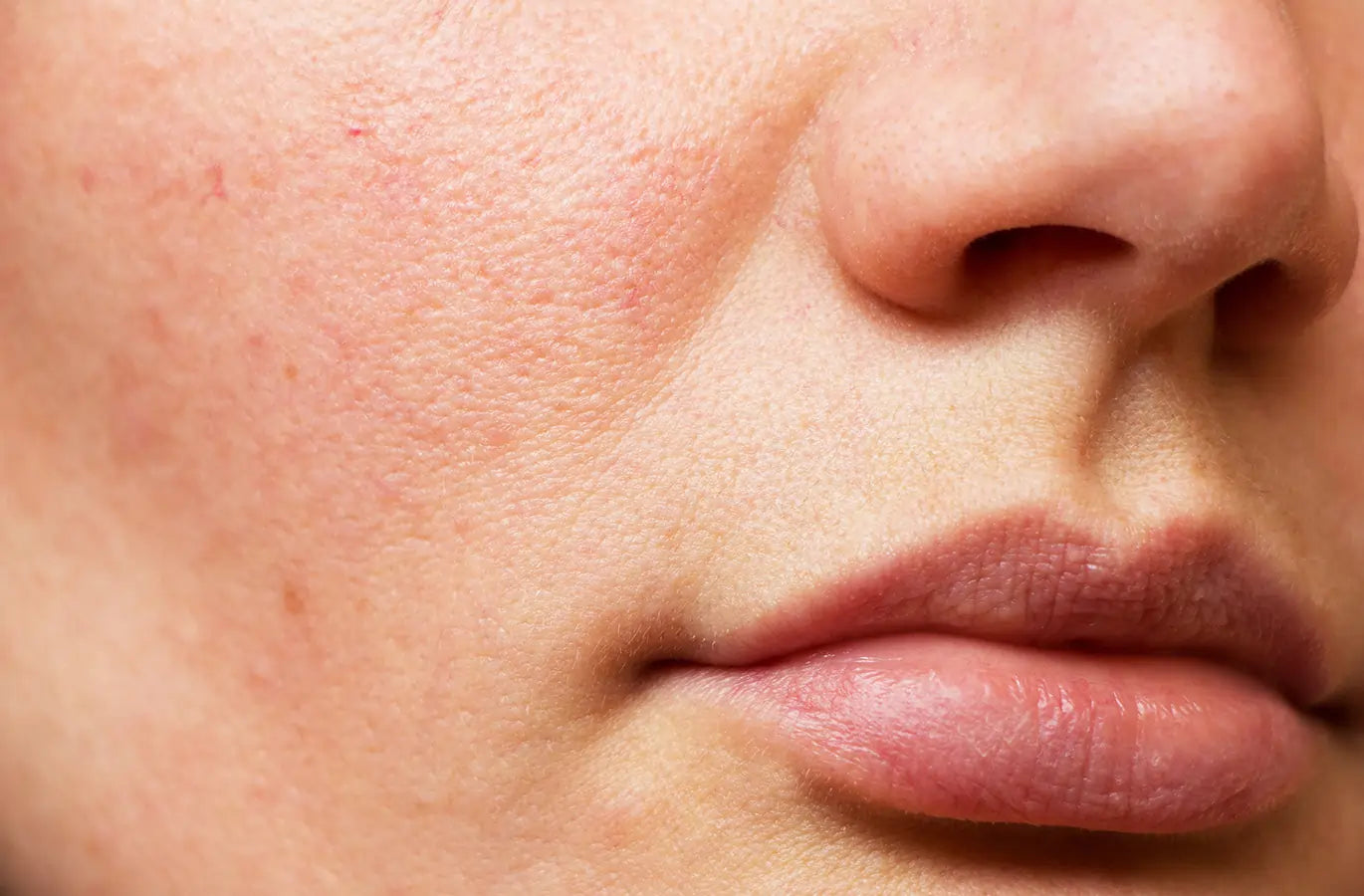
One of the things that has always given me hope when working with skin is its capacity to recover. Recovery is not always complete and it is rarely quick, but it often happens to a greater extent than people expect.
Over the years, I have seen skin go through periods where it appeared overwhelmed by what was being asked of it. Sometimes that was stress. Sometimes it was illness. Sometimes it was simply too much intervention all at once.
What interested me most was not how the skin became unsettled, but what happened when some of that pressure was removed.
Research increasingly suggests that the microbiome is dynamic rather than fixed. It responds to the environment around it, which means it can also respond when that environment changes.1-4
What happens when the pressure is removed
That mirrors something I have observed repeatedly throughout my career.
When skin is given the opportunity to settle, it often begins to behave differently. Not overnight and not in exactly the same way for every person, but often enough that the pattern becomes difficult to ignore.
Often that involved a simpler routine, less unnecessary disruption and enough consistency for the skin to settle into a more predictable pattern.
Sometimes these changes create an environment where the skin appears more comfortable and better able to cope with the demands placed upon it.
That does not mean there is a simple formula for recovery. Every person arrives with a different history, different genetics and different pressures influencing their skin.
What it does mean is that skin is often more adaptable than we give it credit for.
Perhaps that is one of the most encouraging things about supporting the microbiome.
The goal is not perfection. The goal is creating conditions that allow the skin to function as well as it can.
The microbiome is dynamic, not fixed. When pressure is removed and conditions steady, skin is often more adaptable than we expect.
Skin Does Not Exist in Isolation
Long before I understood anything about the microbiome, I understood something else.
My skin never behaved the same way all the time.
I lived with eczema as a child and later developed psoriasis. Even before my formal training, I became aware that my skin seemed connected to things happening elsewhere in my life.
Periods of stress often coincided with flare-ups.
Certain foods appeared to make my skin more reactive.
At times my skin seemed perfectly manageable and at other times it felt as though it was following its own agenda entirely.
Those experiences stayed with me. They were part of the reason I became so interested in understanding skin in the first place.
The same patterns, years later, in my clients
Years later, I began seeing similar patterns in clients.
People would arrive convinced that a product was responsible for everything they were experiencing. Sometimes it was. Often it wasn't that simple.
The skin may have been responding to stress. Sleep may have changed. Hormones may have shifted. A period of illness may have altered how the skin was functioning.
The more I worked with skin, the harder it became to separate it from the rest of the person.
This remains one of the reasons I find the microbiome so fascinating.
The microbiome does not exist independently from everything else happening within and around the body. It exists within a living, changing environment that is constantly responding to internal and external influences.1-4, 6-7
Most people have experienced this, even if they have never thought about it in microbiome terms.
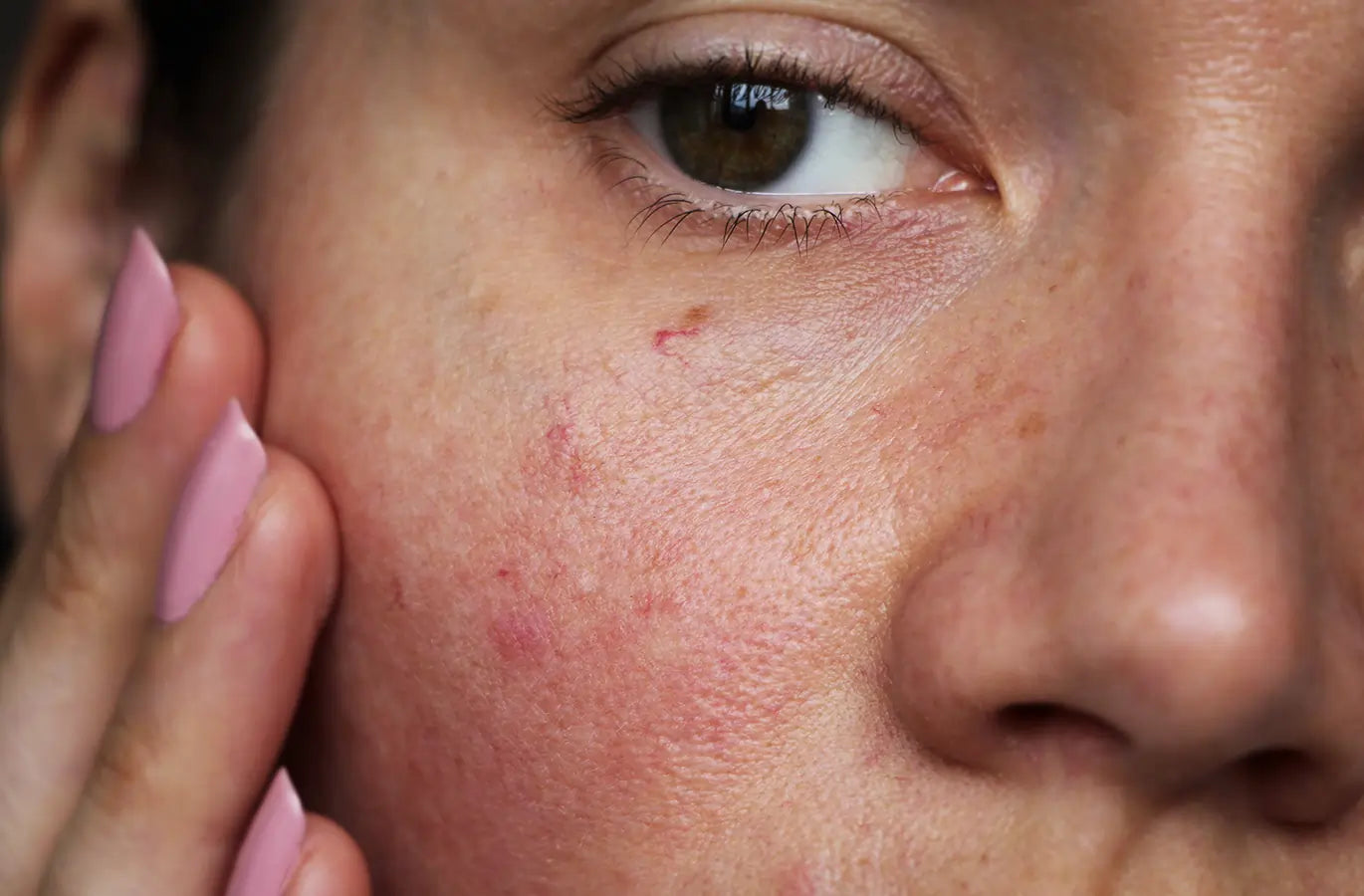
A period of poor sleep arrives and the skin looks different. Stress increases and the skin feels more reactive. Travel, illness, medication, climate and seasonal changes can all influence how the skin behaves.4, 6-7
These experiences remind us that skin is not simply responding to the products we apply to it. The microbiome is part of that broader story.
This is why I have never believed that supporting the microbiome begins and ends with skincare.
Products can contribute positively to the skin environment however they are only one part of a much larger picture.
Healthy skin reflects many influences working together. Sleep, stress, overall health, environment, skincare and the microbiome all interact with one another in ways we are still continuing to understand. 1-4, 6-7
None of these factors operates in isolation and neither does the microbiome.
The microbiome responds to far more than skincare alone:
- SLEEP AND STRESS
- HORMONES AND OVERALL HEALTH
- TRAVEL, CLIMATE AND SEASONAL CHANGE
Do You Need Special Microbiome Products?
As interest in the microbiome has grown, so too has the number of products claiming to support it.
This naturally leads to another question.
Do you need special microbiome products to support the microbiome?
The answer is not always straightforward.
Some ingredients and formulations may be specifically designed with the microbiome in mind. Others may support the skin in ways that help create a favourable environment for the microbiome, even if they were never described as microbiome products.
This is one of the reasons I have always been more interested in how a formulation behaves as a whole than whether it carries a particular label.
Why the label matters less than the behaviour
A product does not support the microbiome simply because the word appears on the packaging. What matters is whether the formulation works with the skin rather than constantly challenging it.
In many cases, supporting the microbiome may be as much about what we stop doing as what we start doing.
Sometimes that means simplifying a routine, reducing unnecessary exfoliation or sometimes it means recognising when the skin is asking for support rather than another intervention.
The microbiome does not read marketing claims. It responds to the environment in which it exists.

What Support Often Looks Like
People often want a simple answer at this point.
What should I use? What should I stop using? Am I doing too much?
I understand the appeal. Clear answers feel reassuring.
The difficulty is that skin rarely follows exactly the same path for everyone. What supports one person's skin may be completely unnecessary for somebody else.
What I have found to be remarkably consistent, however, is the principle behind support.
The principle holds even when the routine differs
It is rarely about forcing the skin to behave differently. More often, it is about creating conditions that allow the skin to function well.
Sometimes that means simplifying a routine.
Sometimes it means recognising when the skin needs rest rather than another treatment.
Sometimes it means paying closer attention to the role stress, sleep, illness or overall health may be playing in the way the skin behaves.4-7
And sometimes it means remaining consistent long enough to understand what the skin is actually trying to tell us.
There is no single formula that applies to everyone.
Yet healthy skin often seems to appreciate many of the same things.
A little less interference. A little more understanding. And the opportunity to function without constantly being pushed in a new direction.
What the Microbiome Continues to Teach Me
The microbiome has changed the way many people think about skin.
In many ways, it did not change how I viewed healthy skin. What it did do was give language to observations I had been making for years.
That healthy skin often responds well to support, it is remarkably adaptable and that it usually functions best when we respect what it is already trying to do.
Perhaps that is why I remain so interested in the microbiome today. Not because it offers another trend to follow, but because it helps explain something I have long suspected.
Skin is a living system, not a problem to solve.
Key Takeaways
Supporting the skin microbiome is often less about what you add and more about creating conditions that let the skin's own systems work.
Good skin is rarely flawless skin, so the goal of support is not perfection but skin that adapts, recovers and copes comfortably.
Constant product change, over-cleansing and over-exfoliation make the microbiome's job harder, so easing back is often more supportive than adding more.
Change is not the enemy. What matters is whether a change helps the skin function better or simply gives it something else to manage.
The microbiome is dynamic, not fixed, so skin can often recover when pressure is reduced and conditions are given time to settle.
The microbiome responds to far more than skincare, so supporting it means looking at sleep, stress, health and environment too, not products alone.
A product does not support the microbiome because the word is on the label. What matters is how the whole formulation behaves on the skin.
Frequently Asked Questions
There is no single formula, because skin differs from person to person. What stays consistent is the principle: create conditions that let the skin function well, which often means consistency and a little less interference rather than more products.
Both are usually well-intentioned, but both can alter the environment the microbiome depends on by affecting hydration, barrier function and the skin's surface conditions. Easing back is often more supportive than adding more.
It varies, and it is rarely quick. The microbiome is dynamic, so when pressure is reduced and a routine stays consistent, skin often settles into a more predictable pattern over time rather than overnight.
Yes. The microbiome sits within a living environment that responds to sleep, stress, hormones, illness, climate and overall health. Skincare is one part of a much wider picture, not the whole of it.
Not necessarily. A product does not support the microbiome simply because the word appears on the packaging. What matters is whether the formulation works with the skin as a whole, rather than constantly challenging it.
- Byrd AL, Belkaid Y, Segre JA. The human skin microbiome. Nature Reviews Microbiology. 2018;16(3):143-155.
- Sanford JA, Gallo RL. Functions of the skin microbiota in health and disease. Seminars in Immunology. 2013;25(5):370-377.
- Harris-Tryon TA, Grice EA. Microbiota and maintenance of skin barrier function. Science. 2022;376(6596):940-945.
- Callewaert C, Ravard Helffer K, Lebaron P. Skin microbiome and its interplay with the environment. American Journal of Clinical Dermatology. 2020;21(Suppl 1):4-11.
- Dreno B, Araviiskaia E, Berardesca E, et al. Microbiome in healthy skin, update for dermatologists. Journal of the European Academy of Dermatology and Venereology. 2016;30(12):2038-2047.
- Chen Y, Lyga J. Brain-skin connection: stress, inflammation and skin aging. Inflammation & Allergy Drug Targets. 2014;13(3):177-190.
- Oyetakin-White P, Suggs A, Koo B, et al. Does poor sleep quality affect skin ageing? Clinical and Experimental Dermatology. 2015;40(1):17-22.
Related articles
What is the Skin Microbiome? A Complete Guide
A founder-led guide to the skin microbiome, how it works, what shapes it, and why supporting it matters more than controlling it.
Read more Read more
Skin Barrier and Balance: The Foundation of Healthy, Resilient Skin
A founder-led look at the skin barrier, why it matters, and how it shapes the way skin feels day to day.
Read more Read more
How Microbiome Skincare Works
Everyone wants the one ingredient that supports the microbiome. It turns out the microbiome doesn't work that way.
Read more Read more